Key points
- Industrial cream cheese production has 9 steps from milk reception to cooling.
- Fermentation runs at 20–30 °C and the target pH is about 4.6.
- Curd is separated by bag draining, a separator, or ultrafiltration; the choice depends on capacity.
- The cooking-mixing step is typically done at 75–85 °C and sets the product's smooth texture.
- Hot filling and +4 °C cold storage support shelf life.
Contents
Industrial cream cheese is made by processing standardized milk in 9 steps: milk reception, cooling and storage, standardization, pasteurization and homogenization, culture addition and fermentation, curd separation and draining, cooking-mixing-homogenizing, hot filling, and cooling and storage. Each step takes the output of the previous one, so machines are chosen to be balanced in capacity.
The 9 steps of cream cheese production
- Milk reception: milk is filtered, de-aerated, and measured.
- Cooling and storage: milk is held at about +4 °C until processed.
- Standardization: fat content is adjusted to the target product; a separator may be used.
- Pasteurization and homogenization: the mix is made safe by heat treatment and homogenized.
- Culture addition and fermentation: starter culture acidifies the milk at 20–30 °C to a target pH of about 4.6.
- Curd separation and draining: the curd is separated from the whey.
- Cooking, mixing, and homogenizing: the curd becomes a smooth mass with salt and stabilizer at 75–85 °C.
- Hot filling: the hot mass is filled into packs.
- Cooling and storage: the product is cooled in a controlled way and held at +4 °C.
| Step | Equipment | Value |
|---|---|---|
| Milk reception | Milk reception unit | - |
| Cooling and storage | Milk cooling tank | +4 °C |
| Standardization | Separator (integrated) | - |
| Pasteurization and homogenization | Pasteurizer, homogenizer (integrated) | 72–75 °C |
| Culture addition and fermentation | Process tank | 20–30 °C, pH ≈ 4.6 |
| Curd separation and draining | Labneh and cream cheese draining unit | 6–18 hours |
| Cooking and homogenizing | Cream cheese cooker | 75–85 °C |
| Hot filling | Filling machine (integrated) | - |
| Cooling and storage | Cold room | +4 °C |
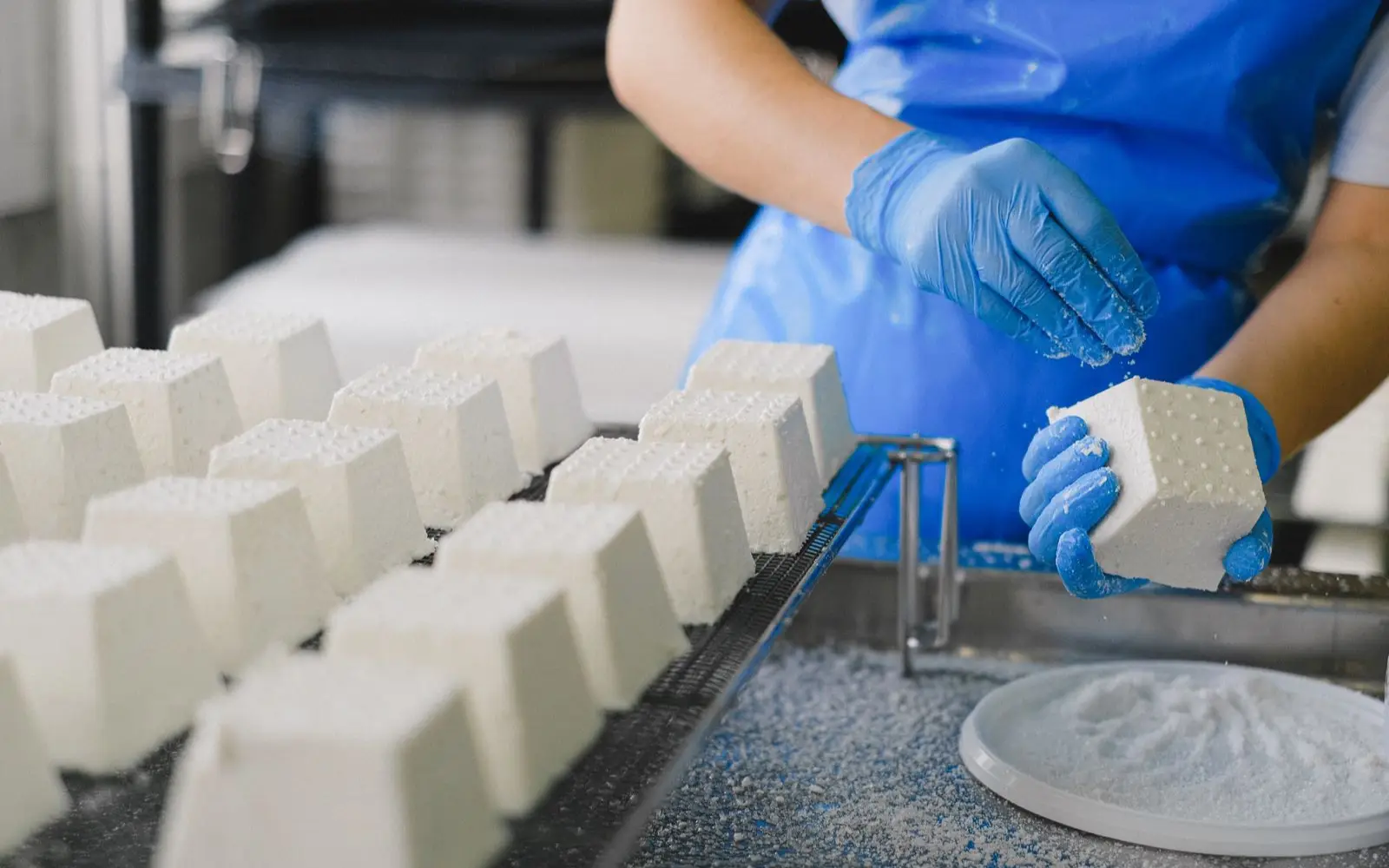
Pasteurization and homogenization
The standardized milk or milk-cream mix is first made safe by heat treatment, then fat globules are reduced in a homogenizer. This prevents later creaming and prepares a smooth texture. The homogenizer is usually integrated into the line.
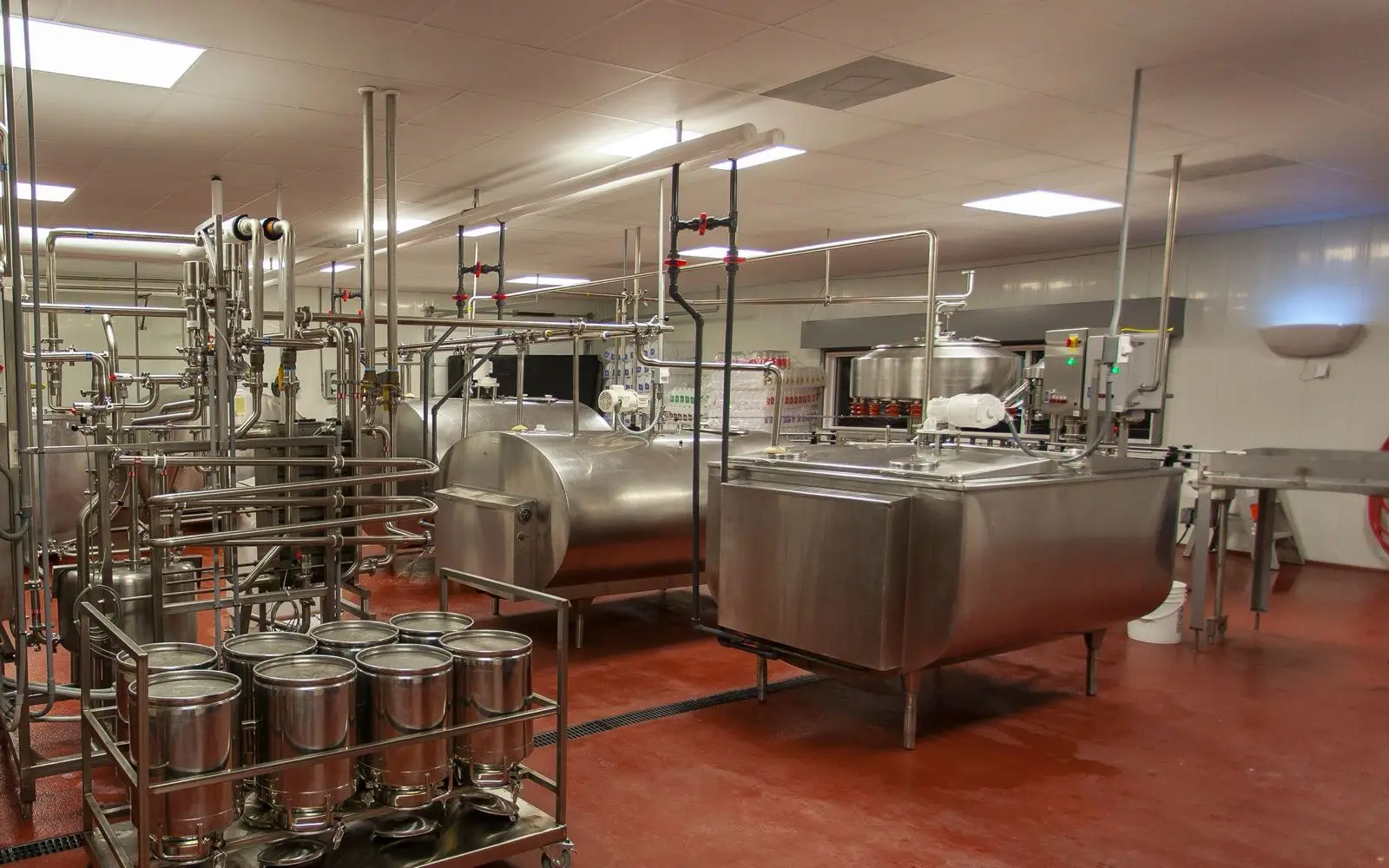
Culture addition and fermentation
The pasteurized mix is brought to 20–30 °C and starter culture is added. Lactic acid bacteria acidify the milk and form the curd; the target pH is about 4.6. This step runs in a jacketed, insulated process tank that holds the temperature steady.
Fermentation time varies with culture and temperature, so pH is followed instead of time. Once the target pH is reached, the curd is ready for draining.

Curd separation and draining
The curd is separated from the whey and becomes cheese curd. At small and medium scale, bag or tray draining is often enough and typically takes 6–18 hours. As capacity grows, a separator or ultrafiltration is considered.
Draining time sets the target dry matter: too short leaves the product watery, too long makes it dry and hard. The same draining layout can also be used for labneh.
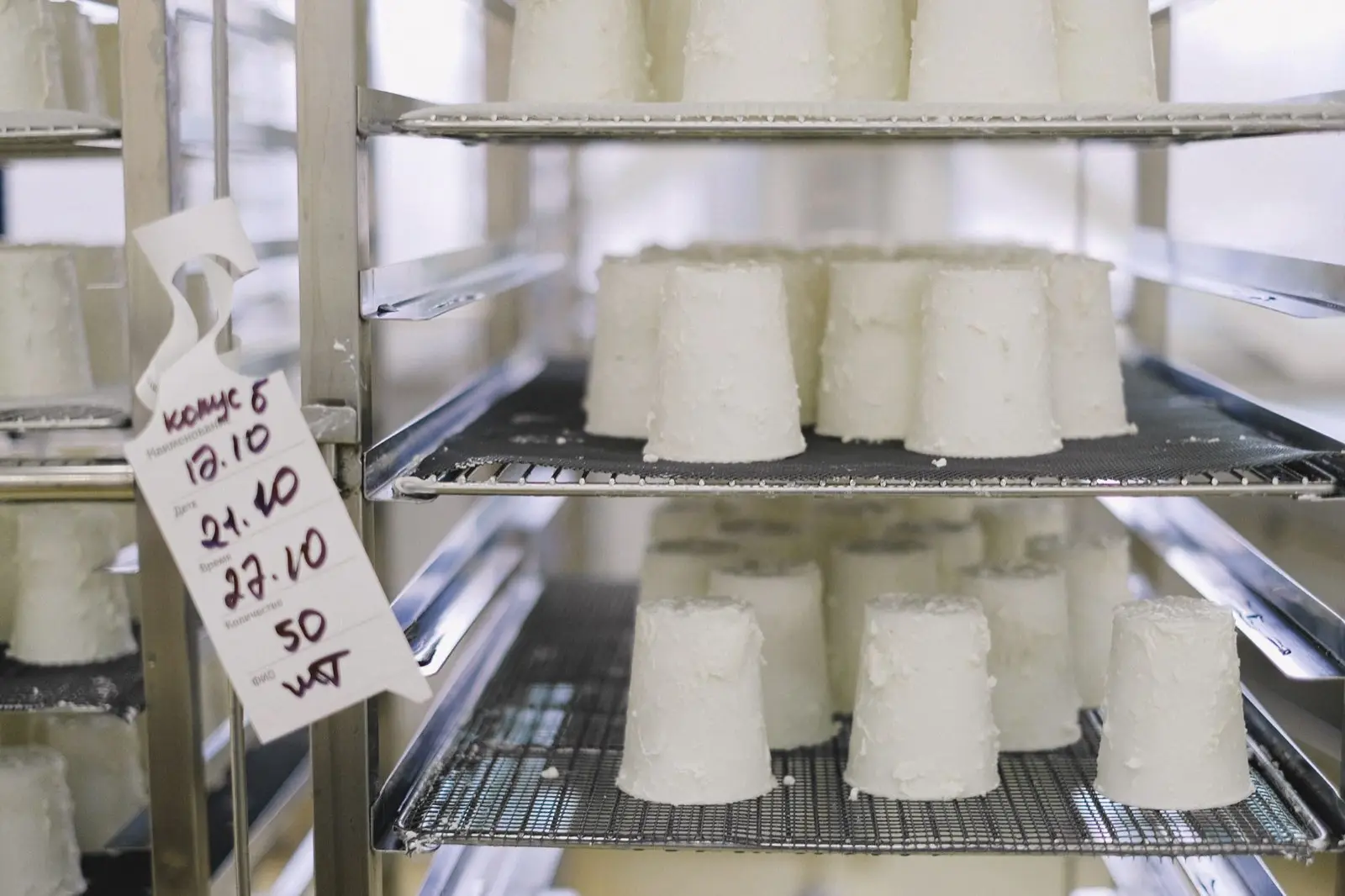
Cooking, mixing, and hot filling
Drained curd is heated to 75–85 °C with salt and stabilizer in a double-walled kettle. The scraper arm prevents scorching while a high-speed agitator homogenizes the mass; optional vacuum removes air bubbles. The product's smooth texture is set in this step.
The hot mass is pumped to the hot-fill machine and filled into packs. Hot filling lowers the microbial load in the pack and supports shelf life. The product is then cooled in a controlled way and stored at +4 °C.

Temperature, pH, and time values in this guide are typical industry ranges. Exact values depend on product type, culture, and operating conditions.
Sources
- Codex Alimentarius, CXS 275-1973: Standard for Cream Cheese (FAO/WHO)
- Phadungath, C. (2005). Cream cheese products: A review. Songklanakarin Journal of Science and Technology, 27(1), 191–199
- Coutouly, A., Riaublanc, A., Axelos, M., Gaucher, I. (2014). Effect of heat treatment, final pH of acidification, and homogenization pressure on the texture properties of cream cheese. Dairy Science & Technology, 94(2), 125–144
- Canadian Dairy Commission: Cream Cheese (Government of Canada)