Process & Heat Treatment
Process Tanks — Jacketed and Insulated Stainless Tanks
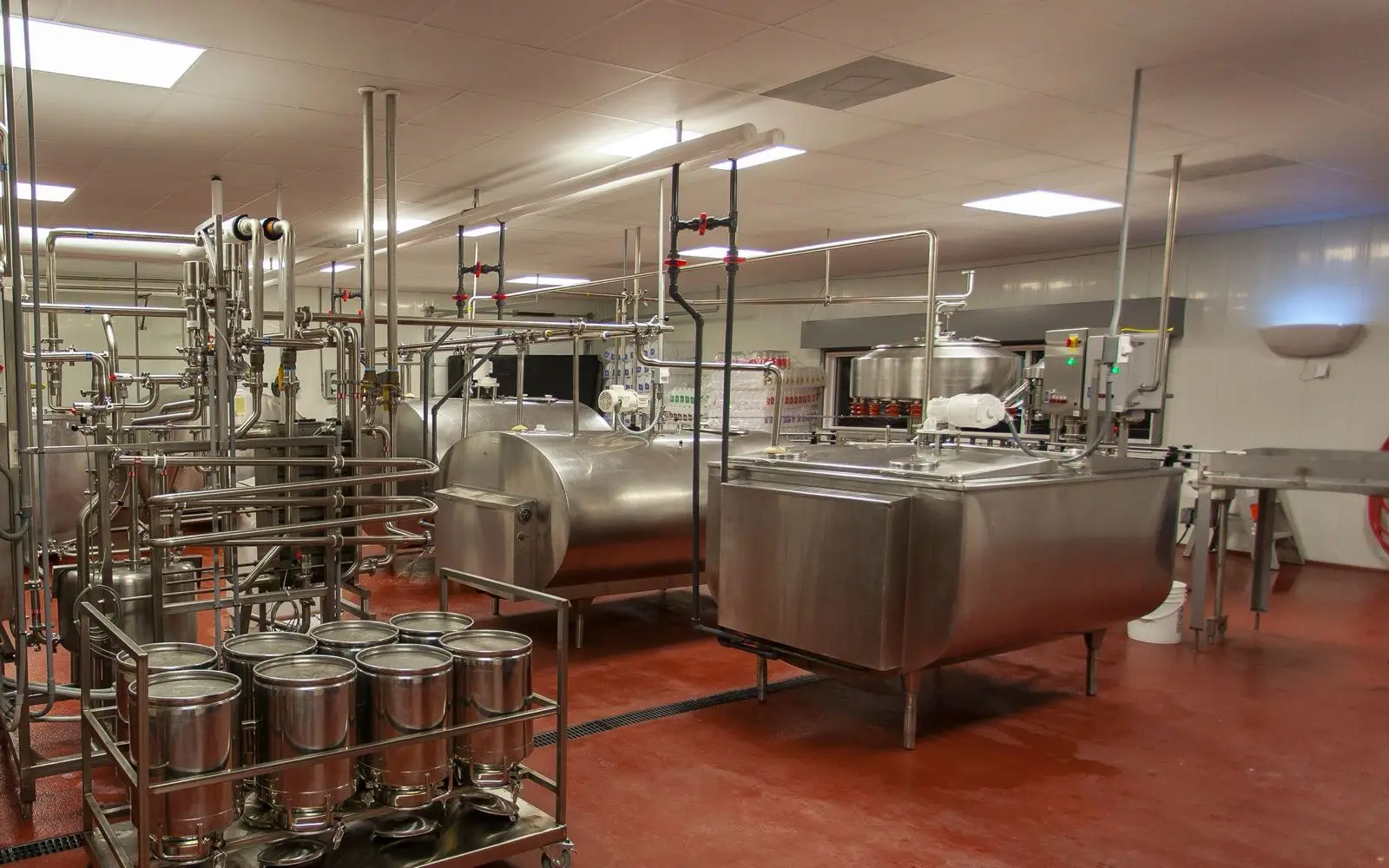
Process tanks are the vessels where milk waits, is heated or cooled, and is agitated during processing. They are built single-wall, jacketed, or insulated depending on the duty.
In short
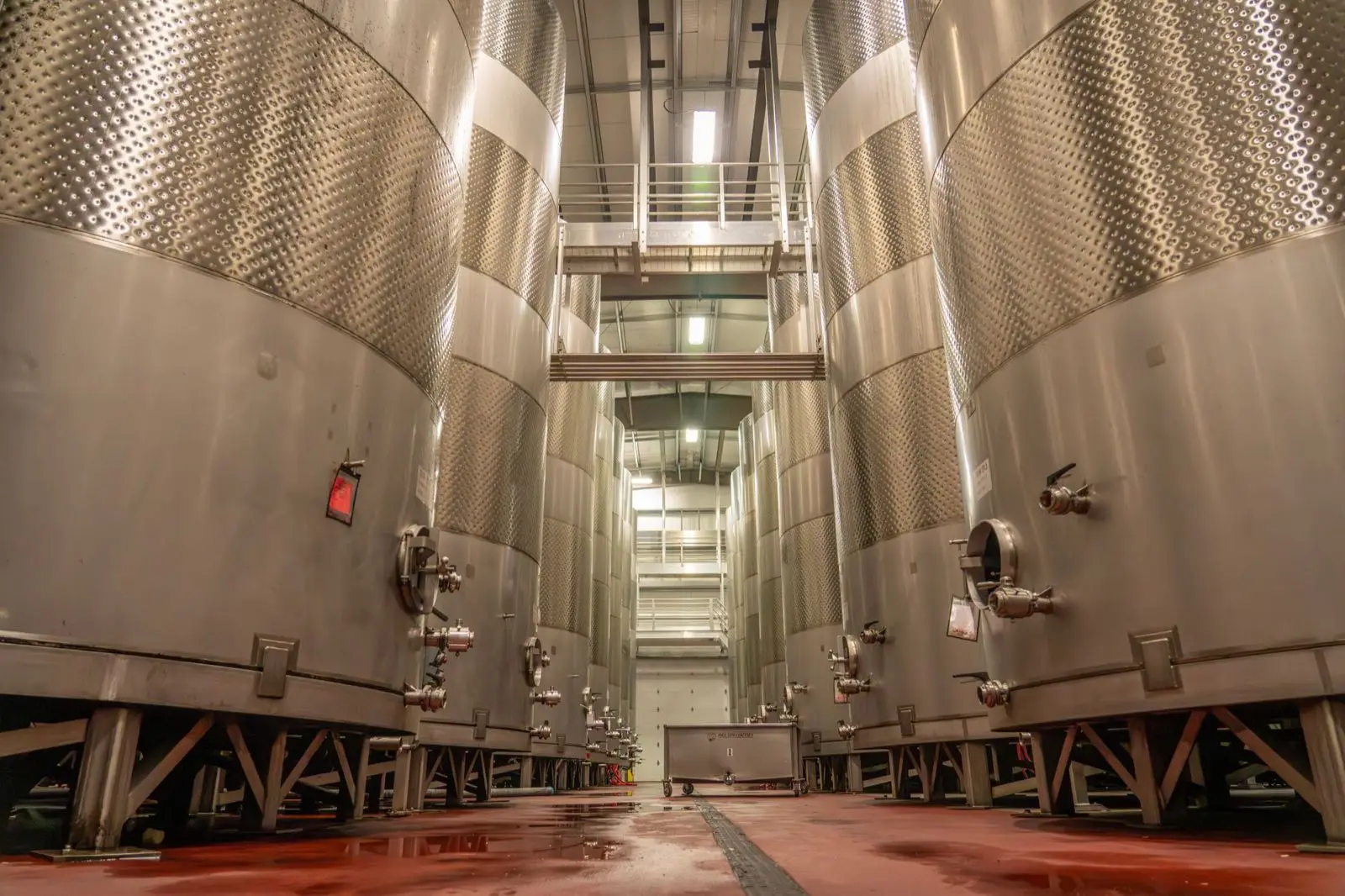
Process tanks are stainless vessels that heat and cool milk through a dimple jacket during holding, culturing, mixing, and storage; they are built in volumes from 500 to 30,000 L. Polyurethane insulation limits heat loss, a duty-matched agitator keeps the product uniform, and a rotating CIP head cleans the tank in place.
- Volume
- 500–30,000 L
- Heating / cooling
- Jacketed
- Clean-in-place
- CIP
Image is representative; the actual product may differ per project.
Process & Heat Treatment
About the product
Every process calls for a different tank. Culturing, cream ripening, and intermediate storage cannot be handled by the same tank design; temperature control, agitation, and holding time change with the duty.
A dimple jacket heats or cools the product by circulating hot or cold water. Polyurethane insulation limits heat loss; the agitator and rotating CIP head keep the product uniform and the tank clean. A conical or dished bottom allows full drainage with no dead spots.
The tank is engineered as vertical or horizontal, with agitator type, jacket, and insulation chosen for the duty. It is matched to your existing CIP system and line connections.
Who is it for?
- Dairies making yogurt, ayran, or cream
- Plants that need a temperature-controlled holding tank for culturing and ripening
- Cheesemakers preparing and storing cheese milk
- Facilities adding a tank that matches an existing CIP line
When is it not suitable?
- Not suited to pressurised processes; the tanks operate at atmospheric pressure.
- Not a standalone solution for continuous heat treatment (pasteurisation), which needs a plate-exchanger pasteuriser.
Key features
- Dimple jacket for heating and cooling
- Polyurethane insulation with stainless outer cladding
- Duty-matched agitator (anchor, propeller, scraper)
- Rotating CIP spray head
- Conical / dished bottom for full drainage
- Level and temperature sensor connections
Use cases
- Yogurt culturing and holding
- Cream ripening
- Ayran blending
- Intermediate milk storage
- Cheese milk preparation
Technical specs
- Material
- AISI 304 stainless steel; AISI 316L on product-contact surfaces on request
- Volume
- 500–30,000 L
- Body
- Vertical or horizontal cylindrical
- Jacket
- Dimple, hot/cold water or glycol
- Insulation
- 50–100 mm PU
- Agitator
- Geared motor, 0.37–4 kW
- Working pressure
- Atmospheric
- Cleaning
- CIP spray head
Values shown are typical industry ranges; exact figures are set in the quote based on capacity and site.
Last updated:
Get a quote for this product
Share daily milk volume and how you’ll use it; we’ll respond with a capacity recommendation and quote.
Request a quote0536 374 98 38Monday – Saturday · 08:30 – 18:00. See the FAQ for technical questions. FAQ.
How it works
- 01
Filling
Milk or product is taken into the tank from the line.
- 02
Heating / cooling
Hot or cold water circulates through the jacket to bring the product to target temperature.
- 03
Agitation and holding
e.g. culturing 42–45 °CThe agitator keeps the product uniform while the required holding time is completed.
- 04
Draining and CIP
The tank is drained through the bottom valve and cleaned with the CIP head.
Optional equipment
- Temperature control panel
- Level indicator / sensor
- Manhole
- Sampling valve
- Adjustable stainless legs
- Load cells (weighing)
What determines the price?
- Tank volume (within the 500–30,000 L range)
- Material quality (AISI 304, or AISI 316L on product-contact surfaces)
- Jacket, insulation thickness, and heating-cooling medium (water or glycol)
- Agitator type and motor power (anchor, propeller, scraper)
- Selected options (temperature panel, level sensor, load cells, etc.)
- Installation and shipping distance
For an exact price, tell us your daily milk volume and how you will use it.
Request a quoteQuestions about this product
Do I need a jacket or insulation? #
- If the tank will heat or cool, a jacket is needed; insulation alone may be enough to hold temperature. The choice follows the process duty.
How is the agitator type chosen? #
- An anchor, propeller, or scraper agitator is selected based on product viscosity and the operation.
Can it connect to my existing CIP system? #
- Yes. The tank is engineered to match the connection sizes of your existing CIP line.